
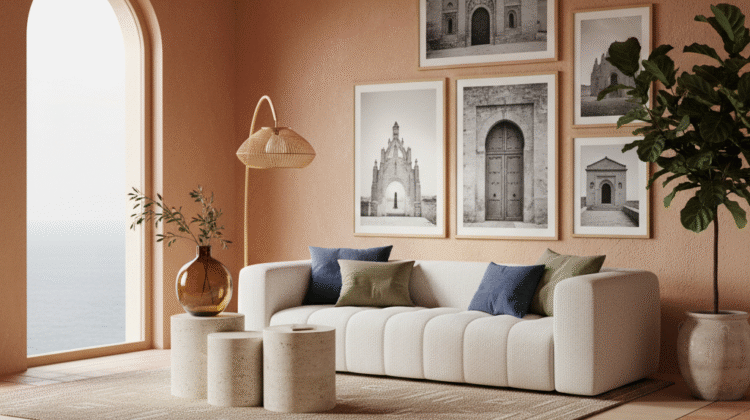
The most evocative homes in 2026 are not decorated; they are curated. In a world of fast-moving trends and digital saturation, the “Quiet Luxury” movement has evolved into something more personal: Experiential Interiors. This philosophy argues that the objects we live with should serve as sensory anchors to the places that have shaped our perspective.
However, there is a fine line between a home that feels like a global gallery and one that feels like a crowded gift shop. To bring the feeling of a destination home, you must move beyond literal souvenirs and look toward the architectural and artisanal DNA of the places you visit.
1. The Shift from Trinkets to Textures
The 2026 aesthetic is defined by “Material Layering” rather than “Thematic Decorating.” Instead of buying a miniature Eiffel Tower, a sophisticated traveler looks for the linen textures of a Parisian apartment or the honed limestone surfaces common in French Mediterranean villas.
The Strategy: Focus on the “tactile memories” of your trip. If you were in Kyoto, it might be the scent of hinoki wood and the texture of tatami. If you were in Mexico City, it might be the weight of hand-blown glass or the rough-hewn grain of volcanic stone. By integrating these raw materials into your existing space, you evoke the spirit of the location without cluttering your surfaces with kitsch.
2. Global Aesthetics Deconstructed
To master the curated travel look, you need to understand the fundamental building blocks of regional design. Here is how to translate three major 2026 travel trends into your interior:
| Aesthetic | Key Elements | How to Bring it Home |
| Indian Ocean Soul | Reclaimed wood, bone inlay, natural jute | A bone inlay console table or a heavy-pile jute rug. |
| Scandinavian Hygge | Light birch, organic curves, bouclé | Investing in sculptural bespoke furniture with soft radii. |
| Mediterranean Quiet | Terracotta, limewash, warm earth tones | Swapping cool-toned paint for Roman Clay finishes in sand or tobacco. |
3. The Rule of the “Single Statement” Anchor
A common mistake is trying to fit too many small mementos into one room. Interior designers in 2026 are moving toward “Anchor Acquisitions.” This involves finding one high-quality, large-scale item that defines the room’s narrative.
Finding a hand-knotted Turkish Kilim or a vintage Moroccan pendant light gives you a focal point to build around. When you have one item with significant “visual weight” and a real story, the rest of your modern furniture acts as a neutral canvas, allowing the travel piece to breathe and command attention.
4. Conscious Collecting & Ethical Sourcing
In 2026, luxury is inseparable from responsibility. Curating a travel-inspired home requires an awareness of the origin of your pieces.
- Support Authentic Artisans: When traveling, prioritize buying directly from the maker. This ensures the community benefits from your purchase and gives you a genuine connection to the object’s history.
- Avoid “Theme” Traps: Respect the culture by integrating elements into your own style rather than trying to replicate a traditional space entirely. A hand-woven African basket used as a sculptural wall hanging is a beautiful nod to craftsmanship; a room that looks like a literal stage set can feel like appropriation.
- The Patina Factor: Look for materials that age gracefully. Natural wood, unlacquered brass, and vegetable-tanned leather develop a “patina” over time, mirroring the way our own travel memories evolve and deepen.
5. Sensory Anchors: Beyond the Visual
Design isn’t just about what you see. To truly recreate the atmosphere of a destination, you must engage the other senses.
The Audio Overview: Many modern homeowners are using AI tools like NotebookLM to organize their travel journals and research. You can even synthesize your trip notes into a “vibe summary” to help you shop for specific scents or textures that match your emotional experience.
Scent and Sound: Luxury hotel groups have long used signature scents to anchor their brand. You can do the same. A specific resinous incense can transport you back to a temple in Ubud, while a curated playlist of Bossa Nova can recreate the breezy energy of an afternoon in Ipanema.
The Comgrove Verdict
Your home should be a physical map of your life’s adventures. By focusing on quality over quantity and texture over themes, you create a space that feels both timeless and deeply personal. The goal is to walk into a room and feel not just that you are “home,” but that you are the sum of everywhere you have ever been.