
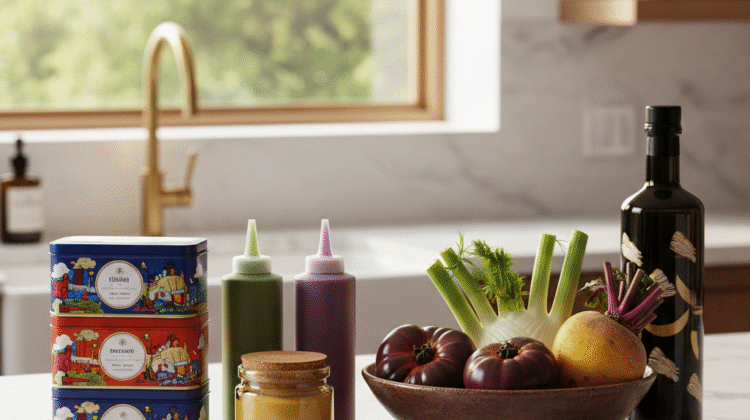
In the luxury culinary landscape of 2026, the status symbols have shifted. We have moved past the era of the high-tech, clinical kitchen filled with sous-vide immersion circulators and sleek, hidden pantries. Today, the elite kitchen is a “Living Ecosystem”—a space that prioritizes ancestral ingredients, regenerative sourcing, and a design aesthetic known as Kitchen Couture.
The modern epicurean is no longer just a cook; they are a curator of biodiversity. Whether it is a stack of vibrant tinned fish or a jar of hand-rendered Wagyu tallow, the ingredients on your counter now tell a story of lineage and land health.
1. The Tallow Takeover: The Return of Ancestral Fats
The most significant shift in 2026 is the widespread rejection of highly processed seed oils in favor of ancestral animal fats. Beef Tallow has reclaimed its throne as the premier fat for high-heat cooking. Prized for its high smoke point (400°F) and rich umami profile, tallow provides a depth of flavor that plant-based oils simply cannot replicate.
Why it’s trending: Beyond flavor, tallow is a staple of “nose-to-tail” eating, ensuring that no part of the animal is wasted. Brands like FOND and Epic Provisions are leading the charge, offering grass-fed, regenerative tallows that are as nutrient-dense as they are delicious. When used for searing a dry-aged ribeye or roasting heirloom potatoes, the result is a superior, golden crunch that harkens back to traditional European bistro cooking.
2. Kitchen Couture: Grocery as Decor
For years, the goal of kitchen design was to hide everything behind custom cabinetry. In 2026, the “Kitchen Couture” trend has flipped the script. Packaging has become so visually stunning that groceries are now used as intentional design elements.
The Strategy: Treat your countertop like a gallery. A stack of Fishwife tinned smoked salmon, with its vibrant, illustrative packaging, adds a pop of color and personality to a marble backsplash. Pair these with the iconic squeeze bottles of Graza olive oil or the architectural glass of Brightland. This isn’t clutter; it is a “dopamine decor” approach to the pantry that signals a life of curated, high-quality choices.
3. The Heirloom Status Symbol
In the 2026 garden-to-table movement, flavor is found in the “forgotten” varieties. Home chefs are moving away from standard produce in favor of Heirloom Biodiversity. Growing your own ingredients has become the ultimate luxury, providing access to flavors that are too delicate for commercial transport.
| The 2026 “Must-Grow” List | Flavor Profile | Sourcing |
| Celtuce (Stem Lettuce) | Nutty, smoky, and crunchy | Baker Creek Heirloom Seeds |
| Purple Calabash Tomato | Intense, wine-like acidity | Seed Savers Exchange |
| Nero di Toscana Kale | Sweet, earthy, and puckered | Seeds from Italy |
4. Fiber-Maxxing: The Sophisticated Gut-Health Pivot
While protein remains a dietary cornerstone, 2026 is the year of Fiber-Maxxing. This isn’t about bland supplements; it’s about using high-fiber roots and prebiotic-rich plants as gourmet textural elements.
Ingredients like cassava, chicory, and sunchokes are being reimagined by home cooks. A roasted sunchoke puree offers a buttery, nutty complexity that rivals traditional mashed potatoes while providing significant prebiotic benefits. The goal is “functional gastronomy”—food that tastes like a decadent indulgence but supports long-term metabolic health.
5. Freezer Fine-Dining
The final pillar of the 2026 kitchen is the elevation of the freezer. We have moved past the “TV dinner” into an era of Freezer Fine-Dining. High-end brands are now offering flash-frozen “base elements”—from clarified bone broths to artisanal handmade pastas—that allow for a restaurant-quality meal in under twenty minutes.
By keeping a “curated freezer,” the modern host can assemble a sophisticated multi-course meal at a moment’s notice. It’s about the luxury of time, allowing the chef to focus on the “final touch” (like a drizzle of premium oil or a sprinkle of fleur de sel) rather than the labor-intensive prep.
The Comgrove Verdict
The 2026 kitchen is no longer a place of utility; it is a sanctuary of heritage. By embracing the “New Terroir,” you are choosing ingredients that respect the earth, honor tradition, and provide a sensory experience that mass-market alternatives can never match.