
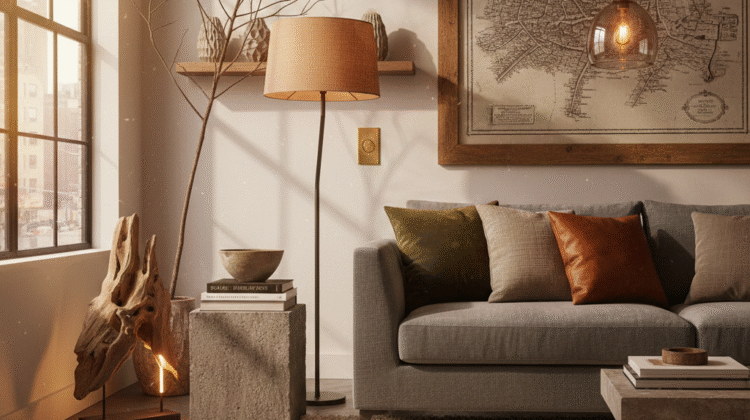
The difference between a room that feels “decorated” and one that feels “curated” is rarely about the total cost of the furniture. In the world of high-end interior design, luxury is defined by intentionality, texture, and the manipulation of light. While a full structural renovation is out of reach for most, the “visual architecture” of a space can be completely rewritten for the price of a single designer chair.
To achieve a Comgrove-level aesthetic, we must move away from the “big box” catalog look. We are aiming for the “Invisible Luxury” trend of 2026: a space that looks like it was assembled over a decade of international travel rather than a weekend spent at a suburban mall.
1. The Rule of Visual Weight
Most budget rooms feel “thin” because the furniture is all the same height or material. To fix this, you must introduce visual weight. If you have a sleek, modern sofa, you need to pair it with something “heavy” like a stone side table or a thick, oversized ceramic lamp.
The $0 Fix: Move your furniture away from the walls. Even two inches of “breathing room” creates shadows that suggest a larger, more custom architectural footprint. This simple adjustment eliminates the “showroom” vibe and introduces a sense of gallery-style curation.
2. Hardware as Jewelry
Builders and mass-market retailers save money on the “points of contact.” This includes drawer pulls, light switches, and door handles. If you have $500 to spend, $150 of it should go toward solid brass or matte black hardware.
Replacing standard plastic light switches with toggles or knurled metal dimmers provides a tactile sense of luxury every time you enter a room. It is a subtle cue to the brain that the space is premium. Similarly, swapping basic kitchen cabinet handles for oversized, heavy-grade pulls can make a standard cabinet look like custom millwork.
3. The Three-Layer Lighting Protocol
Nothing kills an expensive aesthetic faster than “the big light.” Overhead recessed lighting is functional but rarely beautiful. To achieve an editorial glow, you must implement three distinct layers of light:
- Task Lighting: Targeted lamps for reading or working.
- Accent Lighting: Up-lighting a plant or highlighting a piece of art.
- Ambient Lighting: Floor lamps with warm-toned bulbs.
The Strategy: Ensure every bulb in the room has a color temperature of 2700K. This mimics the warmth of a sunset and softens the edges of your furniture. Avoid “Daylight” bulbs at all costs, as they reveal the imperfections in cheaper materials and create a clinical atmosphere.
4. Texture Over Color
In 2026, the “All-Grey” and “Millennial Pink” eras have officially ended. The modern elite aesthetic relies on a monochromatic palette that uses texture to create interest. Instead of adding a “pop of color,” add a “pop of texture.”
| Element | The “Budget” Look | The “Comgrove” Look |
| Rug | Thin synthetic fiber | High-pile wool or chunky jute |
| Pillows | Matching sets of 2 | Varied sizes in linen, velvet, and leather |
| Walls | Flat white paint | Limewash or Roman clay finish |
| Greenery | Small plastic succulents | One single, six-foot tall “statement” branch |
5. The “Single Statement” Philosophy
A common mistake in budget decorating is buying five “okay” things instead of one “incredible” thing. To command attention, your room needs an anchor. Spend $300 of your budget on one oversized, high-quality item. This could be a massive, framed vintage map, a hand-knotted rug found at a thrift market, or a sculptural floor lamp. When you have one item that looks truly expensive, the eye assumes the rest of the room shares that pedigree.
6. Curated Chaos: The Art of the Stack
Luxury is about leisure. A room that looks too tidy feels unlived in. To master “Curated Chaos,” use books as architectural elements. Stack large coffee table books on the floor or use them to give height to smaller objects on a shelf.
Avoid “decor for the sake of decor.” If an object doesn’t have a story or a unique silhouette, it is clutter. Replace five small trinkets with one large, interesting piece of driftwood or a heavy stone bowl. The goal is to create a “collected” look that suggests the occupant has excellent taste and a life well-traveled.
Summary of the $500 Reset
- Hardware & Toggles: $150
- One “Statement” Anchor Piece: $250
- Lighting Upgrades (Warm Bulbs & One Lamp): $100
- Total: $500
By focusing on the points of contact and the quality of light, you can bypass the need for expensive renovations. Luxury is not a price tag. It is a disciplined approach to how a space is experienced.